Digital Strategies That Drive Sustainable Growth for Small Businesses
Here’s the harsh reality; small businesses now operate in a digital environment that changes at a fast pace. Artificial intelligence (AI) platforms along with Google’s AI overview system have now transformed how customers find and connect with brands. The marketing methods that used to be effective have now failed to produce the desired results which has forced business owners to adapt or be left behind.

Table of contents
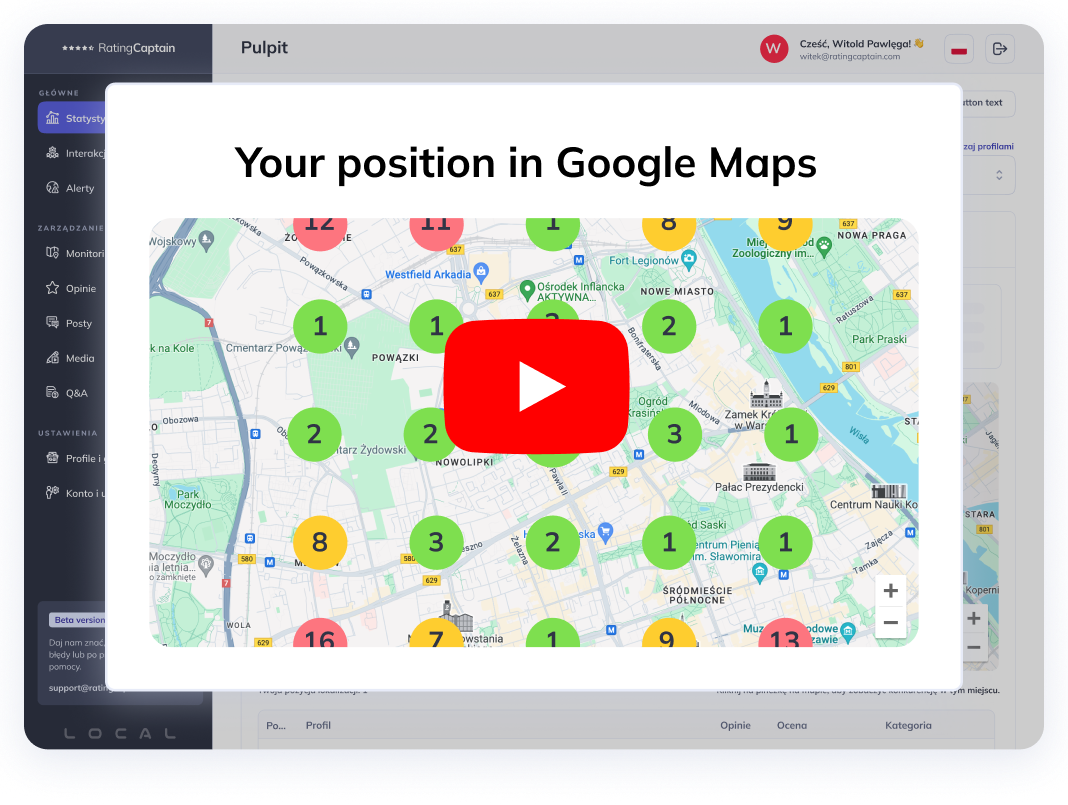

Local SEO-Werkzeug für Agenturen
Automatisieren Sie Ihr lokales SEO und verfolgen Sie die Sichtbarkeit in Google Maps
Here’s the harsh reality; small businesses now operate in a digital environment that changes at a fast pace. Artificial intelligence (AI) platforms along with Google’s AI overview system have now transformed how customers find and connect with brands. The marketing methods that used to be effective have now failed to produce the desired results which has forced business owners to adapt or be left behind.
But here’s the opportunity hidden in this challenge. Businesses leveraging digital solutions achieve remarkable growth rates that surpass their market rivals. Knowing how to use digital technologies properly has the potential to transform your struggling small business into a successful venture. The key to this success lies in using the correct strategies both precisely and persistently.
Let’s start with the basics.
What Are Digital Growth Strategies for Small Businesses?
Digital growth strategies are the structured use of online platforms, tools, and techniques to increase revenue, expand market reach, and build lasting competitive advantage. Digital growth strategies leverage technology to create more efficient customer acquisition processes, improve customer retention rates, and reduce operational efficiency.
The principle behind digital growth strategies lies in creating digital touchpoints that guide potential customers through a structured experience, from awareness to purchase and beyond.
Unlike traditional marketing which involves mass messaging, digital marketing enables precise targeting and measurable results.
The three foundations of successful digital growth strategies are;
-
Knowing the online behaviour of your target audience.
-
Developing helpful content that solves their particular issues.
-
Setting up systems that cultivate relationships at scale.
Why Do Small Businesses Require Digital Strategies in 2025?
A whopping 87% of shoppers initiate their shopping process through digital search, hence, businesses that are not visible online (without websites, social media presence or Google Business Profile) will miss out on promising potential customers. Hence, visibility through comprehensive digital marketing strategies level the playing field for small and large businesses.
Some of these strategies are simple, yet more effective. For instance, a strong local SEO strategy can help your small business show up higher than big-name brands in local Google searches, and using social media websites can give direct access to the target market without requiring enormous advertising budgets.
Offline advertising media like print, radio, and television require large upfront investments with limited targeting capability. Digital strategy allows the investment of precise budgets based on performance measures, so all amounts invested are against quantifiable return.
Besides, digital channels can handle customer volumes without linear increases in operational costs. Automation workflows in email, chatbots, and customer relationship management systems enable small businesses to handle more customers efficiently as they grow.
Unlike conventional marketing where results are largely unquantifiable, digital strategies provide detailed analytics. As a small business owner, you can observe exactly which activities generate leads, close sales, and establish loyalty among customers, all of which enable data-driven decision-making.
Key Digital Strategies for Small Business Growth
1. Know the Online Behaviour of Your Target Audience
Rather than relying on basic demographics, it’s important to understand how your customers think and behave when they make purchasing decisions. Successful small businesses care about “psychographic data”, which goes beyond merely knowing who the customers are, their sex or age bracket to leverage the knowledge of why they make certain decisions concerning purchases.
Consumers today do a great deal of visiting multiple websites, reading reviews, comparing options, and soliciting advice from their friends. You can use this as the niche know-your-customer (KYC) for your business strategy.
Additionally, effective audience research no longer requires expensive consultation or focus groups discussion. Social media listening tools reveal conversations about industry keywords and highlight common problems and linguistic patterns. Also, website analytics tools like Google Analytics and heatmap softwares show exactly how your business websites are used by visitors. Tools like “AnswerThePublic” and Google’s “People Also Ask” feature reveal the exact questions your potential customers ask and naturally attract qualified leads.
All these will make you address specific customer problems rather than promoting generic benefits.
2. Develop Helpful Contents Tailored to Solve their Problem
Now that you have gotten an idea about what they search, what their problem is and what they are looking for. It is now easy to know what to do about it. And doing this requires carefully crafting contents that talk about their worries and proffer solutions to it.
The solution? Your service or your product. Remember, the idea is to bring your services or product to the limelight. However, you are merely capitalising on their online pattern of behaviour to instigate their emotion towards purchasing your product or choosing your services over every other one.
And this can only be achieved through content marketing. Text-based contents for blogs, and video contents for social media such as TikTok or YouTube. But you should also note that the type of content you use will primarily be determined by the platform from which you get to know about their problems. The perk is that content marketing costs 62% less than traditional outbound marketing but generates 3× as many leads.
a. Video Content Strategy
Short-form video contents are still blowing up. Social media sites such as TikTok, Instagram Reels, and YouTube Shorts allow small businesses to reach big audiences through bite-sized, engaging posts. Video content engages and converts more than text-based content.
Center on three content pillars: educate (address problems your audience is facing), entertain (make your content memorable and shareable), and convert (soft sells that nudge people toward your services or products). Demonstrate how your product functions, tell stories of customers or catch trends to stand out.
Successful video contents should not always be promotional but one that creates genuine communities around shared interests and values. User-generated content, behind-the-scenes looks, and authentic storytelling create stronger bonds than glossy promotional content.
b. Strategic Blogging Strategy
Rather than going head-to-head with general industry topics, profitable small businesses concentrate on “niche specialities.” A local CPA could produce content solely on “tax planning for online businesses” instead of general accounting tips, this will build the business authority in the market niche.
Again, content marketing should become audience-first and data-driven. Use analytics tools to discover what your target customers care about and where they hang out. For example, use survey tools and social listening (e.g. SparkToro or BuzzSumo) to reveal niche forums, podcasts, or LinkedIn groups where your audience spends time. Instead of only targeting search terms, create content in those channels.
c. AI-Improved Content Creation
Artificial intelligence writing software like ChatGPT, Jasper.ai or Copy.ai assists in research on content, topic ideas, and optimization but does not replace human creativity.
They streamline content production, eliminate writer’s block and free up time for strategy. An AI-driven content tool (like Surfer SEO or Clearscope) analyzes competitor pages, generates ideas from trending topics, and optimizes already-developed content for better search engine ranking.
3. Set Up Systems that Cultivate Relationships at Scale
a. Search Engine Optimization for Local Businesses (through Google Business Profile)
One of the backbones of correct digital strategy is Search Engine Optimization (SEO). However, this is a classical but ever-changing approach. Neil Patel highlights the challenge, Google has 200+ ranking factors and updates its algorithm approximately 4,500 times a year. No small business can do everything. Random SEO tactics (e.g. keyword stuffing, vague titles) often yield little reward and can even hurt rankings if done poorly.
However, Local SEO provides small businesses with the best opportunity to compete effectively with larger competitors. The numbers prove that 76% of consumers who search for “near me” local businesses will visit a store within 24 hours.
The best way to perform this local SEO is through Google Business Profile optimization. Having a Google Business Profile is therefore the first step towards making people find your business. You can tell most customers don’t go past the first page of Google search results, and “near me” searches are skyrocketing. An optimized Google Business Profile can have a huge effect.
A full Google Business Profile optimization includes professional photos uploaded every month, regular posting about services and offers, prompt responses to reviews from customers, and uniform business information across all online directories.
b. Review Management Systems
Customer reviews serve as essential factors which affect both search engine rankings and purchasing decisions made by customers. Businesses that succeed maintain organized systems to ask satisfied customers for reviews across all the business platforms (Google and social media pages) while responding to all feedback within 24 hours and using positive feedback in their marketing content.
However, you should note that the most common social media mistake is attempting to be on every platform simultaneously. Each platform has its own content style needs, posting rates, and interaction methods.
B2B businesses do better focusing on LinkedIn for professional networking and thought leadership, Twitter for industry news and customer service, and YouTube for educational content. Partnering with a specialized Linkedin ads agency can also help B2B companies maximize lead generation and achieve higher ROI from their campaigns. B2C businesses typically do well with Instagram for visual storytelling, Facebook for community, and TikTok for youth targeting.
c. Content Distribution Framework and the Pareto Principle
A content distribution approach that uses the Pareto 80/20 rule will by far yield the best result. You can do this by evaluating your business after 3 months of consistent strategy to identify where about 20% of your effort yields 80% of desired result. You do this across all your business platforms, which will allow you to focus more on the efforts that matter while minimizing time and resource waste on things that don’t work.
You can also partner with micro-influencers (with 1K-10K followers) or community creators whose audience aligns with yours to make your voice and brand known. Google Ads as well as social media ads can also be used as content channels which enable the algorithm of Google and your social media platform to reach a wider audience. However, remember to always tailor contents shared in such ads to proffer solutions to the pain points of your audience.
Social media ads such as Facebook and Instagram ads achieve their best results by targeting specific interests, behaviours and life events instead of using basic demographic information. Successful execution of paid advertising requires starting with minimal budgets for separate ad groups before allocating more funds to successful campaigns while stopping underperforming following the Pareto principle.

Common Digital Strategy Mistakes and How to Avoid Them
Small businesses can stumble even with the best tools if there is no plan. Hence, you will want to avoid these pitfalls as your business reached a wider audience
1. No Clear Goals or KPIs
Don’t launch campaigns without specific goals. Set specific goals (e.g.Increase online leads by 30% in 6 months or Boost website traffic 50% through SEO). Track metrics against these goals.
2. Neglecting Audience Research
Misunderstanding your customers is a waste of energy. Invest time in market research and persona planning. Understand where your audience is present online and what they’re seeking.
3. Skipping SEO or Content Planning
A few businesses overlook SEO until it’s “too late.” Integrate SEO and content planning from the start. Without it, even great products may never be found online.
4. Ignoring Data and Analytics
Flying blind is a recipe for disaster. Set up analytics (Google Analytics, social insights, CRM reports) before campaigns launch. Review data on a regular basis to optimize strategies, A/B test headlines, images, and calls-to-action to see what actually works.
5. Ignoring Mobile and UX
If your website isn’t mobile-friendly, you’re excluding a huge demographic. Make sure pages load fast and forms are easy to submit on phones/tablets.
6. Inefficient Budget Allocation
Over-investing in unproven channels is a typical error for small businesses. Test, begin modestly, and scale up what performs. Utilize free/low-cost tools first (like Google’s free website creator or basic/free version of most tools) prior to investing heavily.
7. Failing to Use Automation
Manual execution of everything can be exhausting. Yet, many small businesses don’t use marketing automation due to fear or unfamiliarity. Adopting AI test automation alongside affordable automation tools early on helps save time, validate workflows, and maintain consistency.
Conclusion
Digital strategies for growth of small businesses revolve around getting to know your customer profoundly, developing superb content on a consistent basis, and performance metric-driven optimization. Winning comes from getting the basic strategies right and not chasing every new platform and trend. It hinges on audience-first thinking, data-driven decisions, and AI-powered execution.
By critically assessing where traditional tactics fall short and integrating modern tools to enhance content, SEO, and social media ads, you can outpace competitors and build a foundation for long-term success.
About the Author: Olawale Moses Oyewole (https://pragmapreneur.com/)
Olawale Moses Oyewole is an adept writer who stays on top of current events and curates informative and engaging articles for his readers. He is a digital strategist who helps brands gain online visibility.
Share this article
Short description (you can edit)
Tip: you can edit the description before sharing on WhatsApp or adding as Facebook quote
Author of the post
Please rate this article
Local SEO-Werkzeug für Agenturen
Automatisieren Sie Ihr lokales SEO und verfolgen Sie die Sichtbarkeit in Google Maps