

In 2025, one thing in local search optimization became very clear: the winners are businesses that treat Google Business Profile (GBP) as a living operational channel, not a directory-style listing configured once and forgotten. For teams working on reputation and local visibility - also in the context of workflows like Rating Captain - this means more work on data, processes, and signal quality than on “SEO tricks.”
Below are practical takeaways from 2025 and a checklist of the most common mistakes, along with concrete ways to avoid them in 2026.
2025 → 2026 takeaways: GBP as the center of Local SEO, not a one-time setup
Google Business Profile increasingly acts as the primary source of truth about a business: services, availability, hours, location, and customer service. From a local marketing perspective, that means shifting from “set it and forget it” to ongoing management of data and interactions.
An active profile beats a merely correct profile
It’s not enough for a profile to be verified and filled out. What matters is signal regularity: new photos, service updates, posts, work in the Q&A section, and review management. These are the elements that strengthen visibility and conversion from local results.
In 2026, plan GBP like an operational channel with a publishing and review cadence - similar to social media, but with a stronger emphasis on structured data.
Query context: “open now” and accurate hours
In 2025 it became even more obvious that user intent drives local rankings. Queries like “open now,” “near me,” or “today” reward businesses with reliable hours and up-to-date availability. Hour mistakes can reduce not only CTR but also trust in the brand.
Keeping hours current isn’t a detail - it’s a critical intent-matching signal.
Reviews aren’t just the average: freshness, consistency, replies, and credibility
A 4.9 rating won’t compensate for a profile with no new reviews for months - or a profile with reviews that get no response from the business. Dynamics matter more: whether reviews come in regularly, whether they’re diverse, whether replies are visible, and whether review text reflects real services.
Reviews perform best as a process, not as a one-off “boost the average” campaign.
Spam and shortcuts get caught faster
Keyword stuffing in the business name, mass fake locations, artificial reviews, or “virtual offices” without real customer service at that place more often lead to filters, suspensions, or loss of algorithmic trust. In practice, the risk grows faster than the potential gain.
In 2026, stability beats short-term visibility spikes.
AI and contact automation will increase the importance of operational data
Automated contact features, service suggestions, interpretation of questions, and intent matching are data-driven. The better your services, attributes, service area, and availability are described, the higher the chance of accurate matching in results and AI-assisted interfaces.
GBP data is fuel for automation, so its quality will increasingly affect performance.
The most common Local SEO and GBP mistakes - and how to avoid them in 2026
Treat this section like a control audit. Each point is tied to the risk of losing local visibility or decreasing conversions from the profile.
GBP set once and left alone
The most common scenario is a correctly configured profile that receives no activity signal for half a year. The fix is a simple operational rhythm.
Weekly: one new photo or a short post about a service.
Monthly: review services, attributes, and the Q&A section.
Quarterly: analyze queries and expand descriptions around intent.
Ongoing: reply to reviews and questions.
Updates should be cyclical and repeatable - ideally as a team checklist.
Wrong primary category and no meaningful secondary categories
The primary category sets the context for the entire profile. The mistake is choosing a “broad” or “prestige” category instead of the one that matches customer intent. In 2026, pick categories based on query clusters and test the impact of changes on visibility and user actions (calls and direction requests).
Choose categories based on the real offer and intent - not forced keywords.
Outdated hours and missing holiday exceptions
Hours are operational data. Incorrect information can generate negative reviews and user edits. Implement a monthly review and plan exceptions for holidays and long weekends.
“Open now” only works when your hours are correct.
Keyword stuffing in the profile name
Adding phrases like “best plumber Warsaw” to the business name can work briefly, but increases the risk of edits by Google or users, filters, and credibility loss. Stick to the real business name aligned with signage and documents.
Your name must match the brand; move keywords into service descriptions and on-site content.
Duplicate profiles, incorrect pin, messy location structure
Duplicates and inconsistent locations dilute signals and sometimes block verification. The solution is an “entity hygiene” audit: clean locations, consistent identifiers, unambiguous branch assignment, and a correct map pin.
One business, one place, one consistent dataset per location.
No review process and slow responses
Without a process, reviews arrive in waves - or not at all. In 2026, an ethical acquisition system wins: ask after service delivery, provide a simple link, avoid incentives, and respond quickly to negatives. In practice, for reputation-focused brands and teams - like the operating model behind Rating Captain - reply standards and response time are key.
Reviews are customer service and marketing in one, so they need an owner and an SLA.
Inconsistent NAP across the web
NAP (name, address, phone) needs one canonical pattern. The problem is mixed address formats, old numbers, social profiles with different names, or outdated directories. Define one master record and clean citations.
Data consistency strengthens trust and reduces matching errors.
Weak local landing pages and thin content
“Service + 10 cities” pages with near-identical text rarely build an advantage. Better are landing pages with real local proof: actual projects, service radius, terms, team photos, city-specific FAQ, and clear service-area limits.
Local relevance must be proven - not implied by a list of towns.
Reporting only rankings instead of visibility and conversions
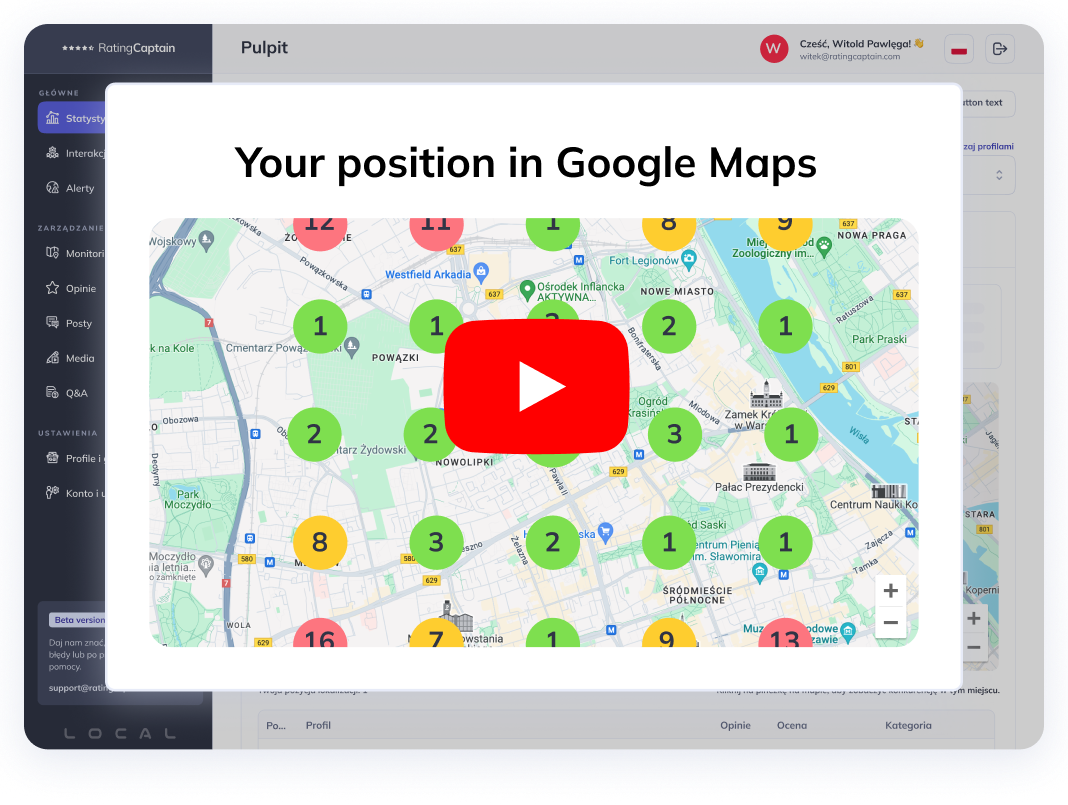
A “rank in the city” means little because the local pack depends on the searcher’s location. Use grid tracking from multiple points in the city, and in reports include direction clicks, calls, messages (if available), and website visits from GBP.
In 2026, success is share of local visibility and profile conversions - not a single position number.
Ignoring competitor spam
Spam in your area impacts the entire local landscape. Monitor suspicious profiles, report violations, and build an advantage through legitimate signals: data quality, reputation, local content, and customer service.
React to spam - but don’t copy it, because penalty risk is rising.
What’s one habit that improves GBP performance the fastest?
Regularly review operational data - especially hours, services, and attributes - paired with fast responses to reviews. This increases intent matching and profile trust.
In 2026, is it still worth investing in local landing pages if GBP is the “center”?
Yes, as long as pages provide unique local value and support conversion. GBP often initiates contact, while the website closes the decision - especially for higher-priced services or longer decision cycles.
GBP and the website should work as one system: informationally consistent and intent-driven.
FAQ: Local SEO, Google listing management, and 2026 practice
Can frequent GBP changes hurt?
If changes are factual and reflect real business operations, they usually help. What’s risky is rapid, frequent edits to the name, category, or address without operational justification.
How often should you update hours and holiday exceptions?
Base hours should be checked monthly, and exceptions should be planned ahead for holidays, long weekends, and seasonal availability shifts.
What matters more: rating average or the number of new reviews?
The best-performing combination is: a solid average, a steady flow of new reviews, credible review content, and consistent owner replies. Star rating alone - without freshness and responses - is a weaker signal.