SEO 2026: AI Is Changing Local Results and the Purchase Journey. What Does This Mean for Brands and Retailers?
Late 2025 and early 2026 confirm what many teams have already been sensing: SEO is entering a phase where visibility is determined not only by rankings in classic results, but also by how search engines and AI tools compose the “first screen” for users.
Table of contents
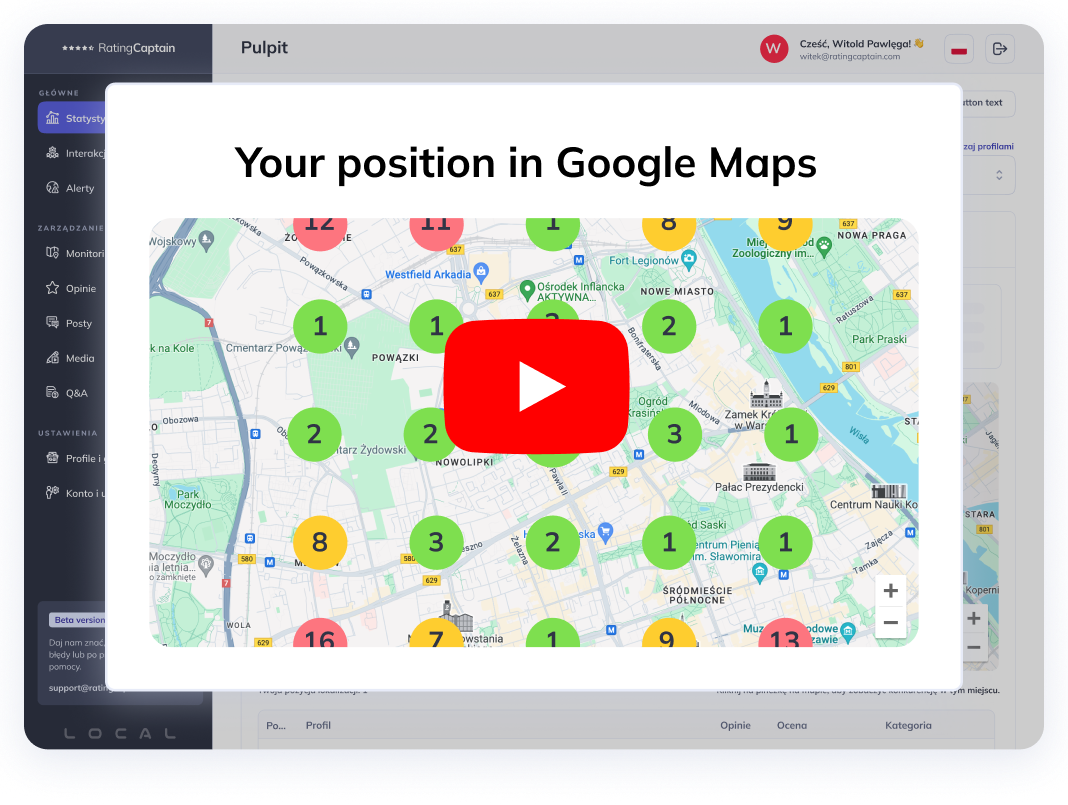

Supera a la competencia con Google Maps
Gestiona y rastrea la visibilidad de tus Perfiles de Negocio de Google
The end of 2025 and the start of 2026 make it clear that SEO is increasingly shaped not only by rankings, but by how Google and AI interfaces compose the “first screen.” In local search, AI Overviews can reduce the visibility of the Local Pack, while Gemini adds an “insights” layer that summarizes how the search engine understands a business. At the same time, ChatGPT is rolling out local knowledge panels, which makes brand visibility more multi-channel—beyond Google alone. In e-commerce, UCP signals a shift toward AI-initiated shopping journeys, where high-quality product data becomes the deciding factor. Below are three news items worth tracking in 2026.
Gemini and local results: “insights” that show how Google sees your business
In recent weeks, there have been more and more signals that Google (via Gemini) is attaching an additional layer of “business interpretation” to local results. These are short pre-views with headings such as “People talk most about,” “Tips from reviewers,” “People go here for,” or “People love to order,” appearing alongside - or during - local browsing experiences. In practice, users get a quick snapshot of how Google interprets a place before they even click into the classic local pack or open deeper details.
The key point is that this isn’t just another “nice snippet.” It’s a new narrative format built from surrounding signals - especially review content, recurring themes, reviewer tips, and the context of categories and services. In other words, Google is moving beyond “who is where” and increasingly answering “why people go there” and “what is most characteristic about the place” - sometimes in a single, highly condensed message.
For local SEO, this shifts the focus from pure exposure to managing “perception” in the SERP. If Gemini is drawing conclusions from what users write (and what can be generalized from it), it becomes even more important to consistently reinforce the right associations: service language, real differentiators, typical use cases, and the themes that dominate in reviews. Practically, this adds a new monitoring layer - not only positions, but also which angles the AI selects as representative and whether they align with how the business wants to be understood by potential customers.
ChatGPT moves into local search: knowledge panels as a new visibility format
At the same time, a new channel for local business exposure is emerging outside of Google. Search Engine Roundtable reports that OpenAI has introduced local knowledge panels for businesses in ChatGPT. The panel appears when a user searches for a local service or place and clicks the business name, which opens additional information in a side panel.
From a local marketing perspective, this is another strong signal that “being present online” is becoming multi-channel, not limited to a single search engine. Importantly, the article includes observations suggesting that the panel may partly reflect data known from Google Business Profile - although this is not officially confirmed as the source.
The practical takeaway is clear: the quality and consistency of business information is becoming even more critical, because data can “live” across multiple interfaces. Accurate hours, correct categories, a consistent service offering, strong photos, and systematic review work are all elements that can shape what users see in different AI environments. In 2026, local brands should be ready for customers to form an opinion before visiting a website - and sometimes to place a call or choose directions instead of clicking through.
E-commerce and UCP: shopping without leaving AI
The third topic is directly relevant to online stores and how Google frames the future of shopping. Google’s documentation introduces the Universal Commerce Protocol (UCP), a standard designed to enable purchases initiated inside AI experiences - for example, in AI Mode or Gemini. The key point is that the seller remains the Merchant of Record, meaning the merchant still owns the transaction and customer relationship.
Google also outlines integration paths, including native checkout, and for select partners, embedded checkout. This indicates the direction: search doesn’t just recommend a product - it can guide users toward purchase completion through a more integrated experience.
For e-commerce SEO in 2026, this means product data hygiene becomes even more decisive. If AI is expected to recommend and compare products, it needs precise inputs: names, attributes, variants, availability, shipping and return policies. In practice, “technical SEO” and product feed work are increasingly merging with the purchase experience inside AI ecosystems.
What to do about it in 2026 - practically
The common thread across these changes is a shift from pure rankings to how a business or product appears within AI interpretation layers. In local SEO, that means even greater care for profile completeness and freshness, because AI can reduce the number of instantly visible spots. In environments like ChatGPT, consistent business data matters more, because informational panels can become the “first touchpoint.” In e-commerce, standards like UCP show that product data readiness and integration capability are becoming competitive advantages - not just “good Merchant Center housekeeping.”
In 2026, brands win by treating visibility as a first-screen user experience - whether that screen is Google, an AI module, or a knowledge panel in a conversational tool.
References
https://www.seroundtable.com/google-gemini-local-results-40741.html
https://www.seroundtable.com/openai-adds-local-knowledge-panel-to-chatgpt-results-40635.html
https://developers.google.com/merchant/ucp?hl=
Share this article
Short description (you can edit)
Tip: you can edit the description before sharing on WhatsApp or adding as Facebook quote
Author of the post
Local SEO Specialist
Julia is responsible for local SEO activities and supports Rating Captain’s brand communication. She optimizes Google listings and co-creates strategies that enhance companies’ visibility in search results. She is passionate about consumer behavior and the latest trends in local digital marketing.
Please rate this article
Supera a la competencia con Google Maps
Gestiona y rastrea la visibilidad de tus Perfiles de Negocio de Google