Local SEO in the Age of AI – How Local Search Engine Optimization Is Evolving
Local SEO is a dynamic and ever-evolving area of search engine optimization focused on improving the ranking of a local business in local search results on platforms like Google. Over the last two decades, local SEO has transformed from basic NAP citations in business directories to AI-powered, intent-based search experiences. Today, we are in the era of Local SEO 3.0, driven by artificial intelligence, personalized content, and behavioral signals.

Spis treści
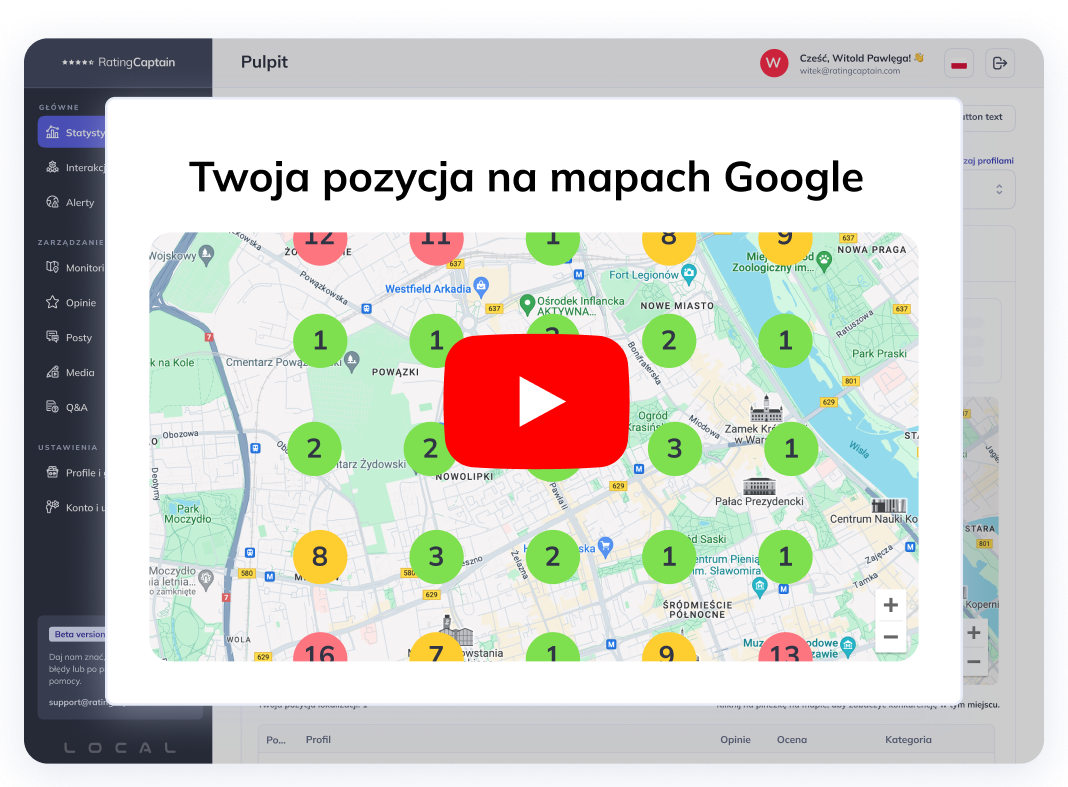

Zdmuchnij konkurencję
z Google Maps
Wypróbuj nasze nowe narzędzie
do pozycjonowania lokalnego
Local SEO is a dynamic and ever-evolving area of search engine optimization focused on improving the ranking of a local business in local search results on platforms like Google. Over the last two decades, local SEO has transformed from basic NAP citations in business directories to AI-powered, intent-based search experiences. Today, we are in the era of Local SEO 3.0, driven by artificial intelligence, personalized content, and behavioral signals. But what does this shift mean for local businesses, and how can you adapt your local SEO strategy to keep up?
Local SEO 1.0 – Listings, Citations and Consistent Business Information
Between 2005 and 2015, local SEO was centered on building citations—primarily ensuring that a business's NAP (Name, Address, Phone number) appeared consistently across all local business directories. Search engines treated these consistent NAP citations as a core ranking factor and a signal of trust.
During this period, tools like Google My Business (then called Google Places) acted as simple business listings with basic details. The results in local search were static and uniform for all users, regardless of location or intent. There was little to no personalization. This early form of local SEO work was easy to manipulate, but lacked depth and relevance.
Local SEO 2.0 – Google Business Profile, Reviews and Local Content
From 2015 to 2023, the focus shifted toward optimizing the Google Business Profile (GBP). It became the foundation of any local SEO strategy, incorporating features such as:
- Customer reviews – their quantity, quality, and recency became crucial for SEO rankings,
- Localized website content – service pages for each local area like “plumber in Chicago Loop”,
- Map integration – visibility in the local pack and on the Google Map,
- Unified business information across GBP, website, and other directories.
Businesses also began combining local SEO efforts with local marketing campaigns across social media, Google Ads, and review platforms to drive traffic and improve conversion. Keywords became more granular, targeting long-tail keywords specific to districts or neighborhoods.
Local SEO 3.0 – AI, Behavior Signals and Personalization
Since 2024, local SEO has entered a new phase. Google has introduced AI Overviews, and platforms like Bing are integrating intelligent models that analyze not just text, but also local intent, behavioral data, and context. In this AI-driven ecosystem, local search engine optimization depends on:
- User behavior – clicks, phone calls, time spent on pages, interaction with the Google business profile,
- Real-time location and device signals – results vary by time of day and GPS,
- Multimedia quality – images, videos, and geotagged media tied to the local area,
- Speed and accuracy – how fast your profile and site load, and whether your info is up-to-date.
AI models like ChatGPT and Gemini consider prior searches, user preferences, and semantic context when generating responses. This shift has made local search conversational and agent-driven. Increasingly, users get answers directly in the search engine—without ever clicking on a website. That’s why creating AI-ready content is now a must.

How to Rank Higher in Local Search Results
If you want your local business to stand out and generate local leads, classic keyword stuffing is no longer enough. Instead, implement a full-scale SEO strategy that includes the following:
1. Perform a Local SEO Audit and Update Your Google Business Profile
Check for accuracy in your business name, phone number, address, and hours. Outdated or incorrect details can harm your local ranking and reduce customer trust. Use Google Search Console and a tool for auditing.
2. Use Local Keywords That Include Your City or District
Generic keywords like “dentist” or “bakery” are too competitive. Instead, focus on local keywords like “dentist Brooklyn Park” or “bakery in downtown Austin.” These better match searcher intent and drive high-converting local traffic.
3. Add FAQs and Q&A to Boost Zero-Click Visibility
Answer common questions about your product or service both on your website and in your GBP. Google often displays these directly in local search results, increasing your visibility without requiring a click.
4. Implement Structured Data and Schema Markup
Use schema.org markup such as LocalBusiness, Organization, and Review to help search engines (and LLMs) understand your content. This is an important ranking factor for both traditional and AI-powered engines.
5. Use IndexNow and Other SEO Tools to Accelerate Indexing
When you update your site with new services, locations, or images, tools like IndexNow can notify search engines immediately. This ensures your changes are reflected in google search faster and can improve your position in local organic results.
Optimizing Your Website for Local SEO Success
While AI is changing the way users interact with local listings, your website remains a critical asset. It serves as the primary source of truth for search engine optimization, AI engines, and prospective customers. Key areas to focus on:
1. Keyword-Rich URLs and Headings
Make sure URLs include local keywords (e.g., /services/roofing-dallas-uptown/) and use heading tags (H1–H3) that reflect local intent. This improves both human readability and indexing efficiency.
2. A Fast, Indexed Site With an Up-to-Date Sitemap
Submit your sitemap to Google and ensure it reflects your current local business listings. Page speed is now a major ranking signal—use tools like PageSpeed Insights to monitor and improve.
3. Location-Specific Landing Pages
Create individual service pages for each location you serve. This improves your visibility for geo-specific searches like “HVAC repair in Denver South.” It also helps with on-page SEO.
4. Build Local Links from Trusted Sources
Engage in local link building by getting featured in local news sites, community blogs, or chambers of commerce. These local links are highly relevant and can elevate your SEO rankings far more than generic backlinks.
Your Local Business in a Smarter Search Engine World
Modern local SEO is more than just having a listing on Google—it’s about managing a living ecosystem of content, behavior data, and AI-friendly structure. While the core principles of Local SEO 1.0—like consistent NAP citations and presence in business directories—are still relevant, they are no longer sufficient on their own.
Today, to truly succeed in local SEO work, you need to embrace the tools and expectations of Local SEO 3.0. That means reacting to real-time user behavior, structuring your site and content for AI engines, and ensuring your google business profile reflects the most up-to-date and useful business information.
So, think beyond simple business listings. Focus on searcher intent, semantic relevance, and interaction data. Use the right local SEO tools, monitor your SEO efforts, and adapt to what users—and machines—expect.
Take care of your company’s online visibility, monitor your Google Business Profile, use data from Google Analytics – and most importantly, think local, act global with Rating Captain Local.
Udostępnij ten artykuł
Krótki opis (możesz edytować)
Wskazówka: możesz edytować opis przed udostępnieniem na WhatsApp lub dodaniem jako cytat na Facebooku
Autor wpisu
Oceń ten artykuł
Zdmuchnij konkurencję
z Google Maps
Wypróbuj nasze nowe narzędzie
do pozycjonowania lokalnego