Monitor Local Rankings in 2026. Why Manual Monitoring Is No Longer Enough? Check Local Rank Tracker
Table of contents

Local SEO tool
for agencies
Automate your local SEO
and track Google Maps visibility
In 2026, manually checking local rankings - typing a query into Google from the office and taking a quick look at the results - is no longer a reliable method. It’s not just an oversimplification, but often a real methodological error. The reason is simple: Google has long based local results on distance, relevance, and prominence of a business, and when location sharing is unavailable, it uses data it already knows about the user [1]. The result is that what you see on one computer does not reflect the full picture of the market.
In practice, local visibility changes street by street. That’s why the Local Rank Tracker in Rating Captain works as an ongoing process of analyzing a visibility map, competitors, and changes over time - not as a one-time position check [2][3].
1. The phenomenon of ranking gaps: why one position is not enough
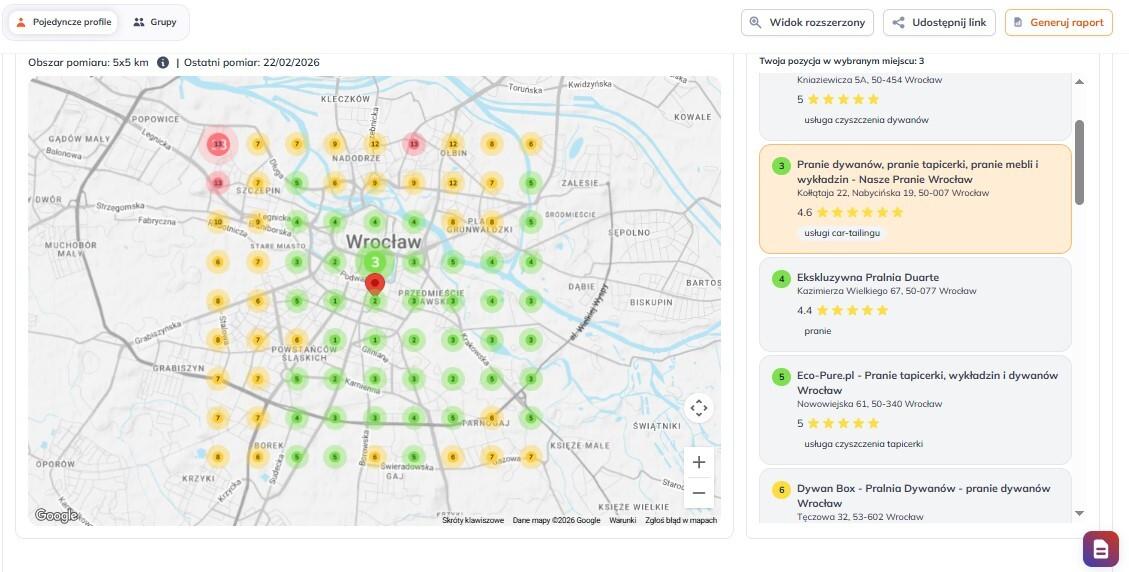
The biggest problem with manual monitoring is that it shows only a single point. Meanwhile, local SEO works across an area. A business can be highly visible near its location, but much weaker in neighboring parts of the city. This is what we call the phenomenon of ranking gaps.
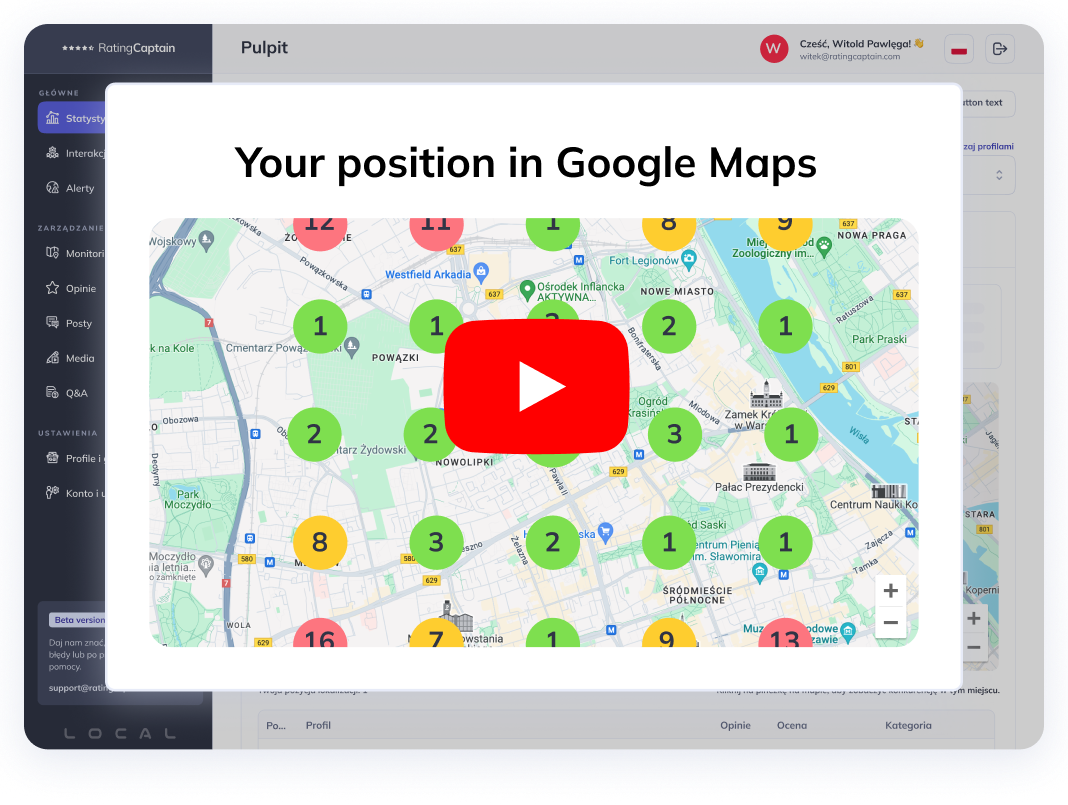
Local Rank Tracker helps solve this problem through map-based position analysis and working with a visibility grid [2][3]. In our app, features such as checking positions on a map, a map position report, and visibility grid editing make it possible to see real local visibility instead of a single result [2][3]. On top of that, there is a heatmap that quickly shows where the business wins and where it loses to competitors [2].
This matters not only from an SEO perspective, but also from a business performance perspective. If one part of the city lights up green and another red, you can see exactly where the business is losing calls and visits - and where your efforts are already working.
2. Local results personalization: why you can’t control it manually
Google clearly states that local ranking depends on relevance, distance, and prominence, and distance is calculated relative to the searcher’s location [1]. In addition, business profile signals matter, such as data completeness, opening hours, reviews, responses to reviews, or content freshness [1]. This means two searches for the same query can produce different results.
Manual rank checking doesn’t allow you to control this. It is susceptible to:
-
the checker’s location,
-
previous search history,
-
device and session context,
-
time of day.
That’s why, in local SEO practice, daily keyword rank tracking works far better than occasional manual checks [2][3]. This type of monitoring shows a trend, not a random screenshot. You can see whether a drop is temporary or lasting, whether it affects one query or an entire area, and whether the issue also appears for competitors.
Additionally, competitor monitoring and map reports make it possible to compare your visibility with other businesses in the same category, which is much more useful than simply asking: “What position do I have today?” [2][3].
3. AI monitoring and Share of AI Voice - a new dimension of local visibility
In 2026, local visibility doesn’t end with classic Google Maps results. Users increasingly reach recommendations through generative answers, and AI selects businesses differently than traditional local results. Search Engine Land, describing a 2026 SOCi report, notes that AI assistants recommend a much smaller share of locations than Google, and that visibility in AI can be many times harder than ranking in classic local results [4].
This is a very important shift. A business may have a decent position in Google Maps, and yet appear weakly in AI recommendations. The same material also showed low overlap between top brands in classic local results and top brands recommended by AI in some industries, confirming that these are two different “visibility systems” [4].
That’s why it’s worth introducing an additional metric: Share of AI Voice. It can be calculated as follows:
Share of AI Voice = (mentions of your brand in AI / total mentions of the category in AI) × 100
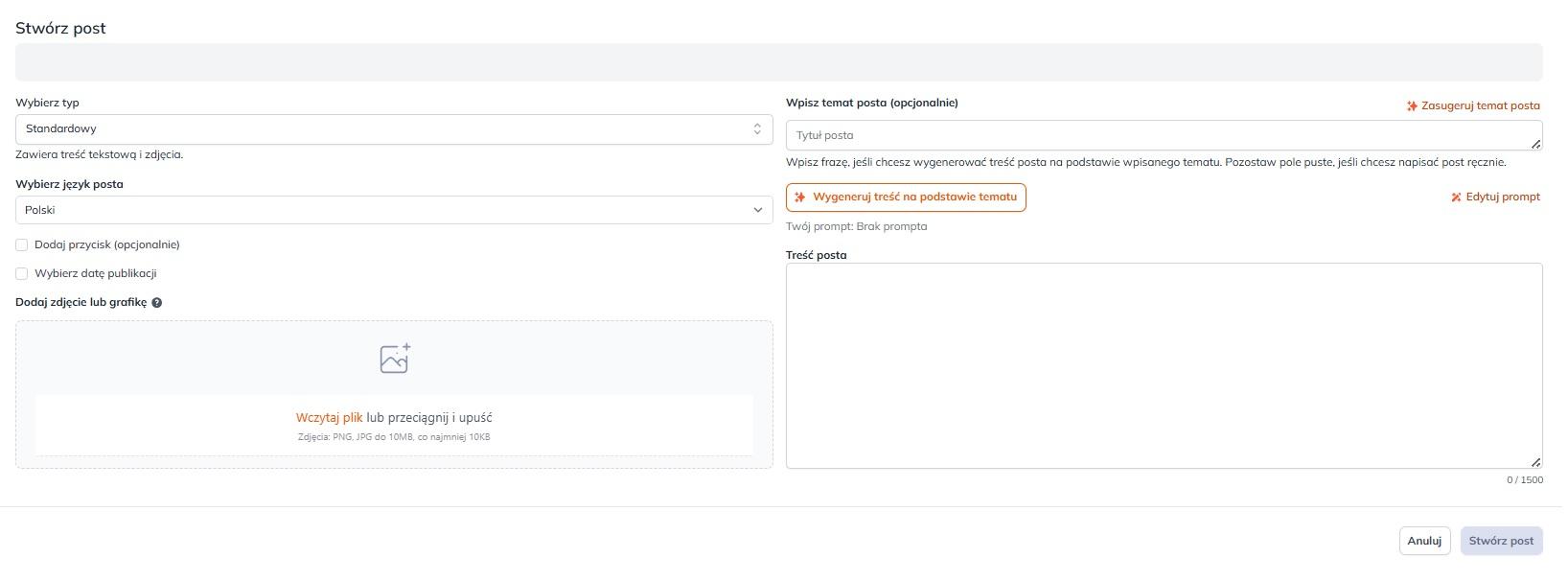
Local Rank Tracker is not only a tool for reading positions. Combined with content features such as an AI post generator and keyword-focused posts, it helps strengthen signals of local brand presence that later also influence how the business is recognized in the AI ecosystem [2][3]. This is exactly where local SEO and GEO begin to truly converge.
4. Daily local rank monitoring: faster reaction and more inquiries
The key difference between manual monitoring and Local Rank Tracker is reaction time. A Google statistic (Think with Google) is still very strong: 76% of people who perform a local search on a smartphone visit a business within 24 hours, and 28% of such searches result in a purchase [5].
This means a ranking drop is not a “later” problem. It’s a problem for today.
If a business checks rankings manually once a week, it may notice a drop only after a few days. During that time, competitors take over traffic, calls, and visits. In Rating Captain, this problem is addressed by:
-
daily keyword rank tracking,
-
notifications and alerts,
-
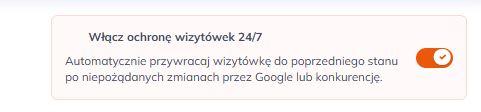
24/7 profile protection [2][3].
In practice, this works like an early-warning system. Instead of analyzing losses after the fact, you can react immediately. For example:
-
fill in missing listing details,
-
publish a post targeting the right query,
-
increase profile activity,
-
check whether an unauthorized change has occurred.
In the context of local SEO, speed of action increasingly determines the outcome of the entire week - not just the aesthetics of the report.
5. Scale for multi-location businesses - manual monitoring stops making operational sense
With one location, manual monitoring is simply inaccurate. With a dozen or several dozen locations, it also becomes operationally unprofitable.
That’s why Local Rank Tracker in Rating Captain is developed not only for small businesses, but also for multi-location brands and agencies. In practice, the key features here are:
-
bulk data editing,
-
profile groups,
-
team management,
-
white-label reporting,
-
protection of all locations against unwanted changes [2][3].
This is especially important when you need to maintain consistency of NAP data, schedules, content, and actions across many locations at once. Google emphasizes that completeness and freshness of information in the Business Profile affects local ranking [1]. The larger the network, the greater the risk of errors - and the greater the value of automation.
Scale also matters, especially when managing many locations. Rating Captain supports over 120,000 Google Business listings, performs over 50,000 rank scans per day, and monitors over 300,000 keywords. These numbers show the tool is built to handle large data volumes and also works well for multi-location businesses [2].
Manual monitoring vs Local Rank Tracker: key differences
Manual monitoring provides a single snapshot and can be useful as a quick test. However, it is not suitable for managing local visibility in 2026 because it:
-
doesn’t show a visibility map,
-
doesn’t detect ranking gaps,
-
doesn’t provide a daily trend,
-
doesn’t provide alerts,
-
doesn’t scale to multiple locations.
Local Rank Tracker in Rating Captain combines rank monitoring, map analysis, competitive tracking, alerts, and features that support content and operational activities [2][3]. Thanks to this, local SEO stops being “manual checking” and becomes a predictable, data-driven process.
Conclusions: how to monitor local rankings in 2026
In 2026, manual monitoring of local rankings is not enough because it measures only a slice of reality. Local results are hyper-local, volatile, and increasingly tied to data quality and signals that are also used by AI systems.
That’s why Local Rank Tracker should be treated not as a simple rank checker, but as a command center for local visibility. It’s a tool that helps detect ranking gaps, react faster to drops, analyze competitors, and scale efforts across many locations at once [2][3].
FAQ: Local Rank Tracker and Google Maps rank monitoring
Does manual rank checking in incognito mode still make sense?
Yes, but only as a supplementary method. It can be a quick test, but it shouldn’t be the basis for reporting or SEO decisions, because it shows a result from one location and one moment in time.
What does Local Rank Tracker provide beyond manual monitoring?
Above all: a visibility map, daily data, competitor monitoring, alerts, and the ability to manage activities across many locations from a single dashboard [2][3].
Why is AI important in local SEO?
Because generative recommendations don’t always match classic Google results. You need to measure not only rankings, but also your brand’s share in AI answers - Share of AI Voice [4][6].
References
[1] Google Business Profile Help, Tips to improve your local ranking on Google.
[2] Rating Captain, Local SEO Tool do pozycjonowania lokalnego.
[3] Rating Captain, Raporty Rank Tracker Google za darmo.
[4] Search Engine Land, AI local visibility is up to 30x harder than ranking in Google: Report.
[5] Think with Google, Mobile’s Growing Role in a Shopper’s Purchase Decision.
[6] Semrush, 26 AI SEO Statistics for 2026 + Insights They Reveal.
Share this article
Short description (you can edit)
Tip: you can edit the description before sharing on WhatsApp or adding as Facebook quote
Author of the post
Local SEO Specialist
Julia is responsible for local SEO activities and supports Rating Captain’s brand communication. She optimizes Google listings and co-creates strategies that enhance companies’ visibility in search results. She is passionate about consumer behavior and the latest trends in local digital marketing.
Please rate this article
Local SEO tool
for agencies
Automate your local SEO
and track Google Maps visibility