Gemini 3 and GPT-5.1 - Two Different Visions of the Same AI Future
Table of contents

Try our new
Local SEO tool
Manage and track visibility of your
Google Business Profiles
Google and OpenAI have almost simultaneously introduced their new models: Gemini 3 and GPT-5.1. At first glance they seem like just “next versions” of systems we already know, but looking deeper reveals two completely different philosophies.
Gemini 3 is presented as a super-intelligent, agent-driven model deeply embedded in the Google ecosystem. GPT-5.1, on the other hand, is a major update to ChatGPT, focused heavily on conversation quality, style personalization, and adaptive reasoning.
1. A new generation of models - what is really changing?
The new models are no longer just “bigger” or “faster.” Both Google and OpenAI emphasize three key priorities:
- better reasoning — models should not only “connect facts” but actually understand complex problems,
- agent-like capabilities — planning and executing full sequences of actions,
- user experience — natural, predictable, human-like conversation with flexible tuning of response style.
Gemini 3 and GPT-5.1 pursue these goals in different ways.
2. Gemini 3 - a super-agent in Google’s world
2.1. A model designed for deep reasoning
Google describes Gemini 3 as its most intelligent model so far. Key points include:
- significantly stronger results in reasoning tests,
- high performance in mathematics, logic, and specialist knowledge tasks,
- a strong emphasis on understanding long, complex, and chaotic data.
This is no longer just a “chatbot” answering isolated questions — it is a model built for multi-step, unconventional challenges.
2.2. Gemini 3 Deep Think - a “longer reflection” mode
One of the biggest innovations is Gemini 3 Deep Think — a special variant of the model that:
- spends more time on internal reasoning,
- is intended for the most difficult tasks,
- performs better where creativity and non-obvious solutions are required.
Initially, Deep Think is released selectively - first to safety teams, later to premium users.
2.3. Three main application areas: learn, build, plan
Google organizes Gemini 3’s use cases into three categories.
Learn anything - learn whatever you want
Gemini 3 offers:
- a very long context window (around one million tokens),
- native handling of text, images, video, audio, and code,
- advanced understanding of structure and relationships between different data types.
Practical examples include:
- turning handwritten notes and family recipes into an organized digital cookbook,
- breaking down difficult scientific papers into summaries, flashcards, and visualizations,
- analyzing video recordings (e.g., sports training) and producing improvement plans.
Build anything - create whatever you want
Gemini 3 heavily targets developers and creators:
- generates complex web interfaces from a single well-described prompt,
- can create 3D games, shaders, generative graphics,
- supports code improvement, adding tests, and refactoring.
The model doesn’t just write code - it understands existing projects and entire repository contexts much better.
Plan anything - plan and execute
Here Gemini moves into agent territory:
- it can plan tasks over longer horizons,
- maintains a coherent plan across many steps,
- works well in complex workflows — from email/task management to organizing trips or projects.
This is a step toward an assistant that not only advises but also executes tasks (within user-granted permissions).
2.4. Deep integration with Google products
A defining feature of Gemini 3 is immediate integration with the Google ecosystem:
- presence in Google Search as a generative answer mode,
- integration with the Assistant app,
- availability for developers through Google Cloud and coding tools,
- compatibility with popular IDEs.
The strategy is clear: instead of “another standalone AI app,” Google is building one intelligence layer across all major services.
2.5. Safety and robustness
Google also highlights safety features:
- extensive robustness testing against misuse,
- reduced tendency to “agree with” users at the expense of accuracy,
- better resistance to prompt-injection attacks and attempts at illegal use.
This matters especially as the model becomes an agent with access to tools and user data.
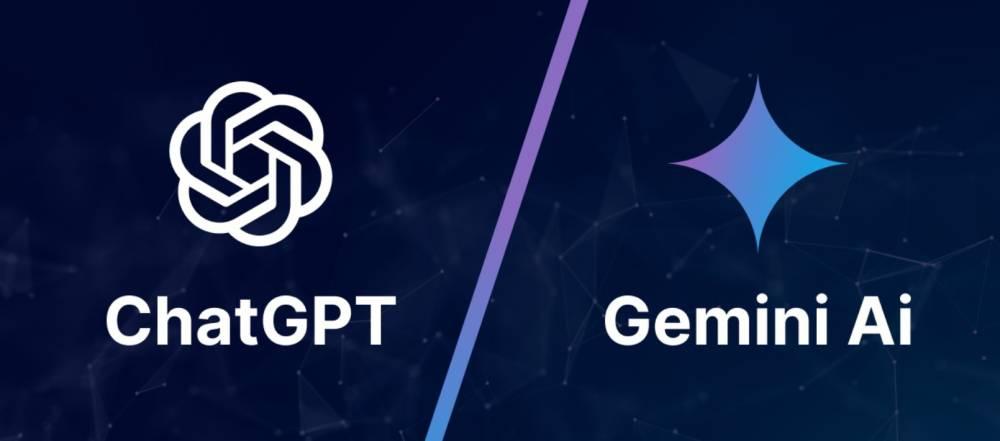
3. GPT-5.1 - a ChatGPT that thinks better and “feels” the conversation
3.1. Two pillars: Instant and Thinking
OpenAI develops GPT-5.1 in two major variants.
GPT-5.1 Instant - everyday model
This is the default model for most tasks:
- fast and responsive,
- much better at following formats and instructions,
- noticeably more natural in conversation (warmer, less rigid).
The key innovation is adaptive reasoning - the model decides for itself when to “think longer” and when a short answer is enough. This blends efficiency with deeper reasoning.
GPT-5.1 Thinking - for difficult tasks
This variant is designed for more demanding applications:
- dynamically adjusts its reasoning time to the complexity of the problem,
- produces clear and structured explanations,
- performs better on multi-step tasks requiring long reasoning chains.
It is ideal for complex analysis, advanced technical explanations, or work with difficult concepts.
3.2. Style personalization - a tailor-made assistant
One of GPT-5.1’s strongest features is its personalization layer. Users can:
- choose the response style (default, friendly, efficient, professional, more honest, more humorous),
- control length and conciseness,
- adjust “warmth” — from formal to casual,
- decide how scannable the text should be — sections, paragraphs, bullet points,
- set how often emojis should appear.
Additionally:
- the model follows custom instructions more consistently,
- once set, preferences work across all chats and models in ChatGPT,
- the assistant may suggest changes if it notices recurring patterns (e.g., regularly asking for shorter answers).
3.3. Availability and API integration
GPT-5.1 is rolled out gradually:
- first to paid plan users,
- later as the default ChatGPT model,
- older GPT-5 versions remain temporarily as legacy options.
In the API:
- Instant is the fast, versatile chat model,
- Thinking is meant for reasoning-intensive, highly structured tasks.
4. Gemini 3 vs. GPT-5.1 - comparing the approaches
4.1. Different priorities
Gemini 3 (Google) focuses on:
- raw reasoning power,
- agent-like planning over long horizons,
- multimodality and very long context,
- deep integration with the Google ecosystem and developer tools.
GPT-5.1 (OpenAI) focuses on:
- conversation quality and naturalness,
- personalization of style and assistant behavior,
- adaptive reasoning combined with high speed,
- smooth upgrades within existing ChatGPT workflows and APIs.
4.2. Which model should you choose?
It can be simplified into two scenarios.
Gemini 3 is the better fit if:
- your work is tightly connected to the Google ecosystem,
- you need agent-like scenarios — AI that not only advises but performs tasks,
- you work with complex multimodal data and extremely long context,
- you need maximum reasoning and planning capabilities.
GPT-5.1 is a better choice if:
- conversation quality matters most to you,
- you want to tailor the assistant’s style to yourself, your team, or your brand,
- you already rely on ChatGPT and prefer an evolutionary upgrade,
- you use AI heavily for conceptual work, writing, translation, research, or precise formatting tasks.
5. Conclusion - not one winner, but two complementary visions
The new generation of models clearly shows that:
- raw model power matters less than how well the AI collaborates with the human,
- agent-like behavior (planning and executing actions) becomes as important as output quality,
- style, tone, and personalization are no longer optional — they are core product features.
Gemini 3 and GPT-5.1 do not fight as much as they offer two complementary visions:
one of an agent-assistant deeply embedded in Google’s tools, and another of a conversational assistant you can finely tailor to your preferences.
Bibliography
Pichai S., Hassabis D., Kavukcuoglu K., A new era of intelligence with Gemini 3, “The Keyword – Google Blog”, 18.11.2025,
https://blog.google/products/gemini/gemini-3/
OpenAI, GPT-5.1: Smarter, more conversational ChatGPT, 12.11.2025,
https://openai.com/pl-PL/index/gpt-5-1/
Share this article
Short description (you can edit)
Tip: you can edit the description before sharing on WhatsApp or adding as Facebook quote
Author of the post
Local SEO Specialist
Julia is responsible for local SEO activities and supports Rating Captain’s brand communication. She optimizes Google listings and co-creates strategies that enhance companies’ visibility in search results. She is passionate about consumer behavior and the latest trends in local digital marketing.
Please rate this article
Try our new
Local SEO tool
Manage and track visibility of your
Google Business Profiles